

The Cologne Game Lab
Founded in 2010, the Cologne Game Lab (CGL) is an internationally oriented institute of the Faculty of Cultural Sciences at TH Köln – University of Applied Sciences. Over the past 16 years, CGL has developed into Germany’s leading academic centres for the study, development and research of digital games. Located in Cologne’s Mülheim district, CGL brings together around 350 students from more than 40 countries, an international team of professors, researchers and practitioners, and a broad network of partners from academia, industry, culture and the public sector. Its work is guided by three interconnected areas: Study – Research – Incubate. Together, they define CGL as a place where games are studied, created, questioned and brought into the world.
Study
CGL offers four degree programs in game development, game studies, animation and related creative disciplines. Students combine artistic, technical and theoretical approaches with hands-on project work, developing games in interdisciplinary and international teams. while gaining a critical understanding of games as a cultural, technological and economic medium. This includes academic reflection on games and play, grounded in the field of Game Studies.


Preparing students for a rapidly changing field is central to CGL’s approach. Alongside practical skills and games literacy, students develop entrepreneurial competencies and learn to reflect on the cultural, social and ethical dimensions of their work. Close exchange with industry and academia keeps teaching connected to emerging technologies and practices, while encouraging students to actively shape the future of the medium.
Diversity and inclusion are integral to CGL’s teaching and learning culture. International partnerships further extend this environment, including a Double Degree agreement with the French École nationale du jeu et des médias interactifs numériques (ENJMIN) of CNAM, which has enabled Master’s students to study in both Germany and France since 2020.
Research
CGL explores how games and play shape cultural and technological futures. Games are both the subject and the means of research: a cultural practice, a design methodology and a way of imagining alternative futures.

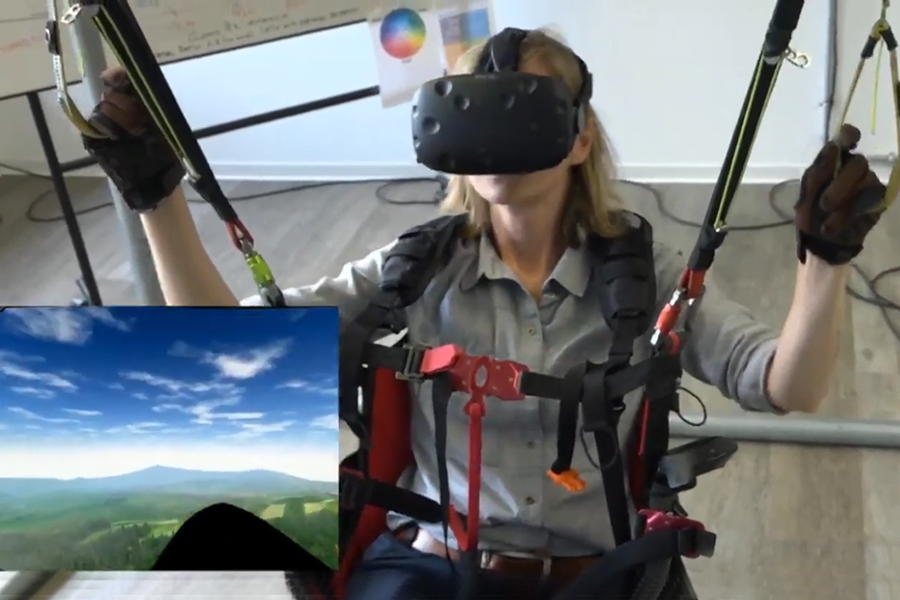

Our research combines theoretical inquiry, artistic experimentation, technological innovation and applied development. Collaborations with partners from industry, culture, education, civil society and the public sector create a continuous exchange between research and practice, turning knowledge into prototypes, tools and exhibitions while bringing practical challenges back into research.
This approach is reflected in CGL’s growing portfolio of externally funded research, including successful European projects, and in numerous publications with leading academic publishers. CGL also fosters interdisciplinary exchange through conferences such as Clash of Realities, Transformations and Spiel|Museum, bringing together perspectives from research, industry and artistic practice. Research-integrated teaching and dedicated facilities further connect research, teaching and creative practice, with studios, a computer lab, audio and post-production facilities, open project spaces and dedicated environments for VR, game testing and motion capture.
Incubate
CGL supports students and alumni in taking their creative work beyond the classroom and towards professional practice. Through the Game Starter Foundry, teams develop innovative game and media projects from early ideas towards market readiness, funding and company formation. Since its establishment, more then twenty teams have received support, with several securing follow-up funding, publishing agreements, awards or long-term contracts.


Broken Paternoster Games, a student-led publishing collective founded in 2023, complements the Foundry by helping student teams bring their games to market and gain practical experience in quality assurance, marketing, distribution and publishing. Together, both initiatives connect education with entrepreneurship and industry practice while contributing to the regional creative economy.
Building on 15 years of teaching, research and transfer, CGL continues to expand its role as a platform for interdisciplinary exchange. Its new international conference format “Transformations“ brings together different perspectives and practices to explore the future of play and the ways games can contribute to the futures we want to create.